A Zebu of Many Colors

Have you ever seen a red Miniature Zebu calf born in the spring change into a light gray coat by his second birthday? Or maybe you have watched two dark-gray parents surprise everyone by having a bright white calf? The wonderful mix of Zebu colors—from deep blacks and bright reds to spots, grays, and brindles—is one of the most exciting parts of raising these tiny cattle. While it might seem like magic when a new calf arrives, coat color actually follows clear rules of genetics passed down from parents to their babies.

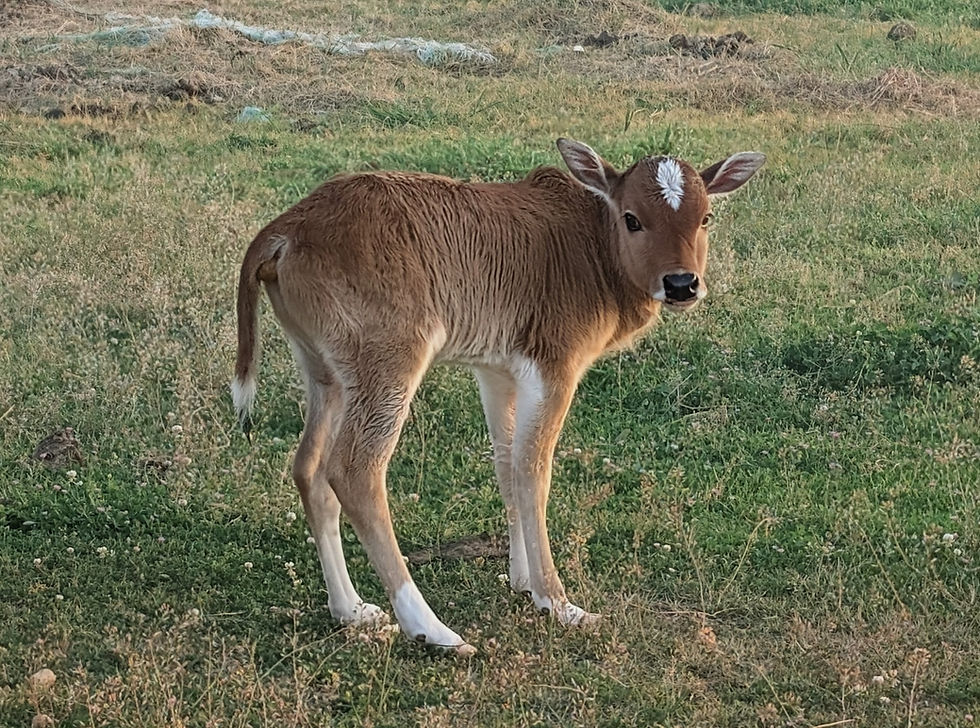
Pictured to the left is Just OK Ranch Po'Boy shortly after birth. Pictured to the right is Po'Boy at 4 months old. You can see how he is already starting to gray as his single gray dilution gene lightens his red base coat. This will continue until he is a light "rose" gray. Po'Boy also minimally expresses the paint gene- you can spot the white star, tail end, and sock best in his baby picture.
No matter how many spots or shading patterns a Zebu has, every cow starts with just one basic underlying color: black or red. Black pigment is dominant over red pigment, so a cow needs two recessive red genes to look red. However, Miniature Zebus can also carry a special "wild-type" version of this gene that modifies the base coat to allow red and black hair to mix across different parts of the body.
That wild-type gene is what gives Zebus their special shading, dark humps, and shifting colors. As Zebu bulls grow up and mature, natural hormones cause dark pigment to spread over their shoulders, neck, and hump, turning a light gray calf into a dark charcoal adult. Other extra genes act like additional modifiers. Dilution (Gray) genes can wash out black pigment into soft grays or soften red pigment into light cream tones. Meanwhile, pattern genes add white patches for paint Zebus, tiger-like brindle stripes, or speckled spots scattered across the coat.
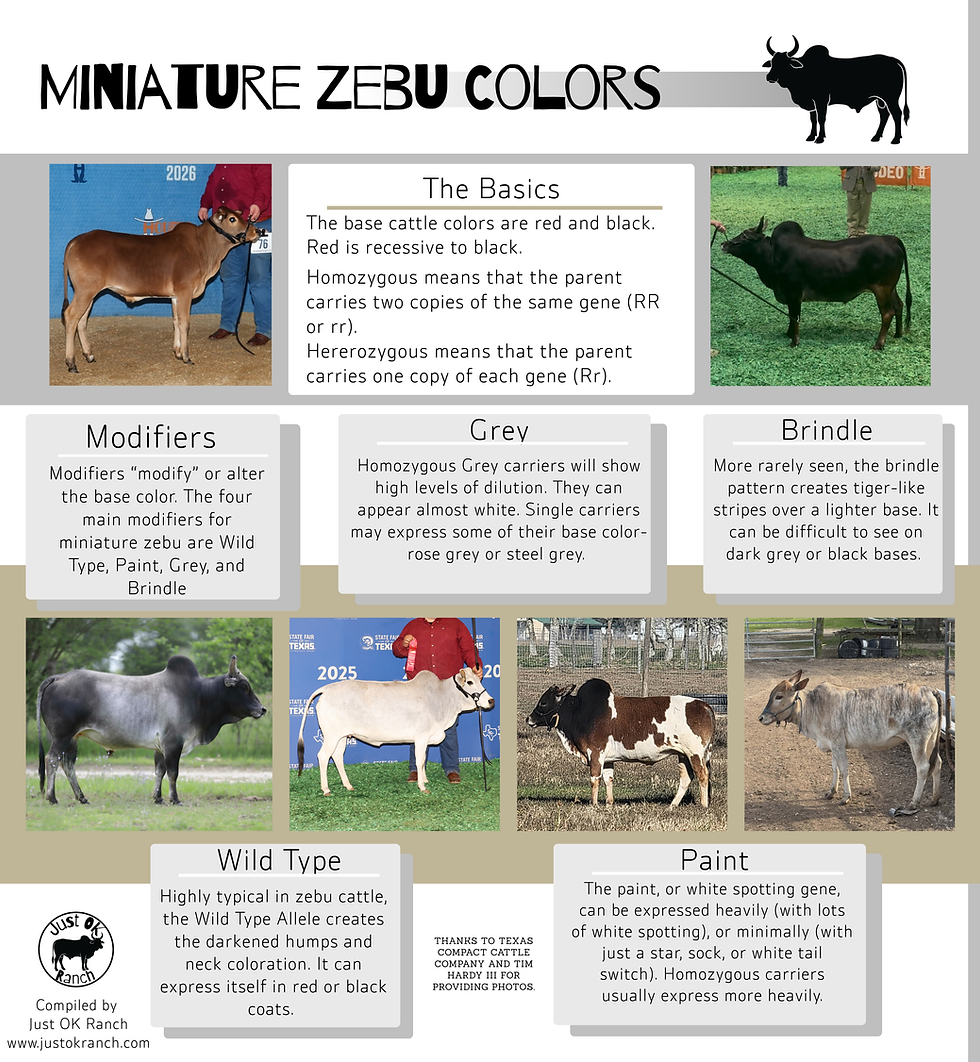
Modifiers can also stack, which can make color prediction tricky. One zebu could look steel gray with a little white splashed on their belly that is barely visible and carry a copy of the recessive red gene, one copy of the gray dilution gene, and paint genetics. Modifiers don't cancel each other out, but rather, can interact and create really beautiful and interesting patterns. A zebu may minimally express a paint modifier (have very little white), but their offspring may be very loud and colorful!
For example, our bull, H. Barrera Ranch Boudreaux (pictured above in the lower left), is a black base, wild type, with one gray dilution gene, and carries a recessive red gene. He has sired solid reds (out of red cows) such as Just OK Ranch Firecracker (pictured upper left), grays of every shade, and paints (from paint cows) such as Just OK Ranch Jedi (pictured below).

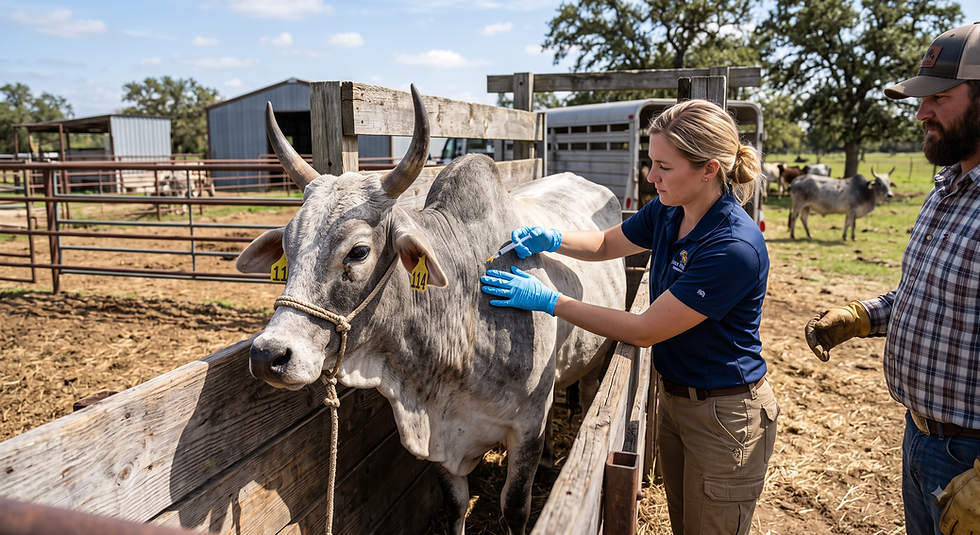
Knowing how these genes work helps Zebu breeders plan for future calf crops. Ranchers can even send a simple hair sample to a DNA lab to check if a dark bull carries a hidden red gene before breeding season. By understanding base colors and hidden traits, owners can predict what color calves might arrive in the pasture. But even with all the fun coat patterns available, healthy bodies, strong frames, and gentle personalities will always be the most important traits to breed for at the ranch.
If you would like to get your herd tested there are a number of options. UC Davis leads the field, and offers IMZA genetic test linkage for IMZA registered cattle. You can find more information here: https://vgl.ucdavis.edu/dna-tests/cattle/miniature-zebu/all
Additional Reading:

Comments